What Happened to the Families With Congressman at Airport Jones
Three decades ago, iv teenage girls were brutally murdered in an I Tin can't Believe Information technology's Yogurt! shop in Austin, Texas. The horrific criminal offence has haunted their families, the city, and the investigators who chased every pb in the instance to a dead stop. Could new data finally help solve the case?
"I tin see them, I can still see the within of that place," John Jones, the first investigator on the case, tells "48 Hours" correspondent Erin Moriarty. "That stuff'south … indelibly burned in my heed."
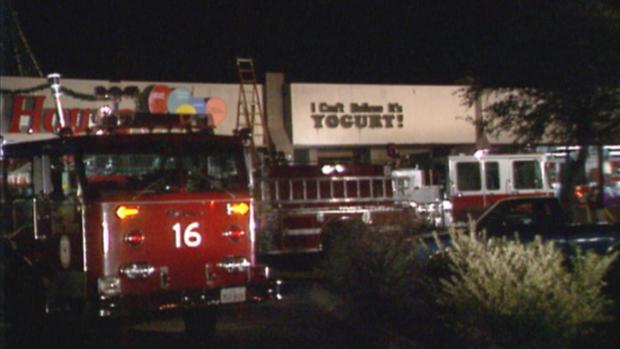
The story starts on Dec 6, 1991, when Eliza Thomas, Sarah and Jennifer Harbison and Amy Ayers were tied upwardly and shot. The yogurt shop was then set on burn. For decades, investigators worked to discover suspects. In that location were eventually arrests and fifty-fifty convictions. Merely those convictions were overturned, leaving the case unsolved today.
"At that place is a kind of torture that continues by the fact that it's unsolved and it'southward ongoing," says Sonora Thomas, who was thirteen when her sis Eliza was killed.
"It'due south e'er there," says Jones.
There may exist some positive news, however. A modest sample of male DNA was found on 1 of the victims. With DNA research advancing, investigators hope there will be a match that solves the example.
"Do you believe that at that place is right now, some show that could pb to the killers?" Moriarty asks Texas defense attorney Joe James Sawyer.
"Yep," Sawyer says.
"Is this the end of the beginning or the outset of the end?" Jones asks.
THE SEARCH FOR ANSWERS
It's been 30 years since John Jones began the painstaking search for the killers of four teenage girls in an Austin, Texas, yogurt shop.
He has long since retired from the Austin Police force Section and moved out of Texas. Just copies of some of the instance files moved with him.
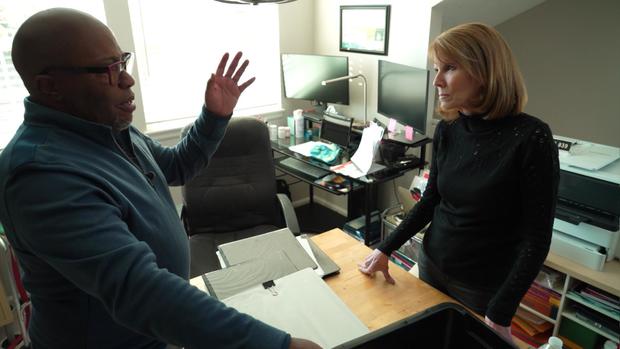
Erin Moriarty [with Jones in his home function]: What is all of this here?
John Jones: These are my notes. … Oh, that's the large book…this one is really from day 1 … hypnosis, polygraph, confessions.
Erin Moriarty: (picks up coffee mug) You know, I observe this sitting hither.
John Jones: Yeah.
Erin Moriarty (reads coffee mug): "Nosotros will non forget." You lot haven't.
John Jones: Nope. I can't.
The images of December 6, 1991, remain all too brilliant.
John Jones: I can definitely nevertheless run into information technology.
It started with that telephone call from dispatch to become to a scene of a burn down, that would turn into something far worse:
JOHN JONES: What do y'all'll got out there? I'k en road … airport 35.
DISPATCH: We've got a fire …
JOHN JONES (1991 on radio): OK. I'm copying the fire part, only you cut out on the kickoff part of that though.
DISPATCH: … apparently a robbery and homicide. In that location's, uh, three fatalities.
JOHN JONES: That'southward 10-4, we're en route (turns on siren).
John Jones: And then about halfway out there, they call again on the radio and said we found a quaternary torso.
A local Goggle box news coiffure happened to be filming Jones on a ride along that night.
JOHN JONES (on radio): What place of business concern is this at?
Dispatch: It'due south the I Can't Believe It's Yogurt.
JOHN JONES: OK.
John Jones: The fire department had just knocked down the burn. … there was all the same a lot of water in at that place … a lot of smoke still. … it was all muted grays, blacks in that location was no color in at that place with the exception of the girls.
The girls were quickly identified. Ii had been working at the shop, closing up that night: Eliza Thomas and Jennifer Harbison were both 17 years old. Jennifer's 15-yr-old sister, Sarah, and their friend, xiii-year-one-time Amy Ayers, had met them there to head dwelling.
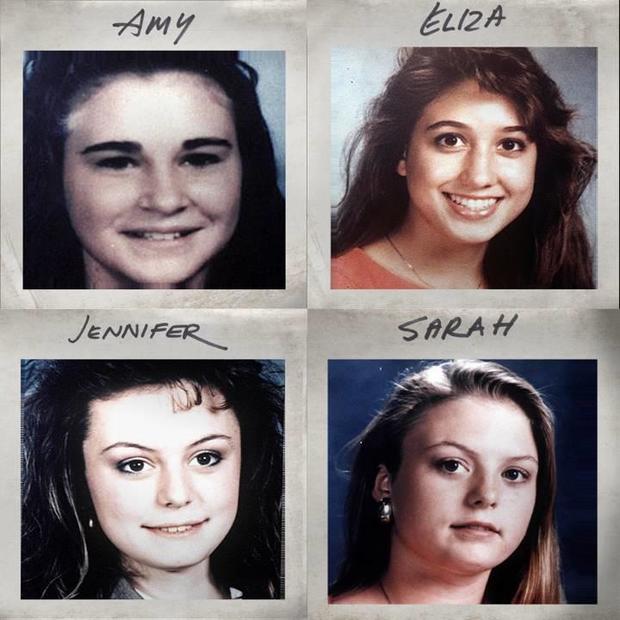
The 4 girls had been gagged, tied upwardly with their own wear, and shot in the head. Investigators would learn at least one of the victims had been sexually assaulted. The yogurt shop had also been attack burn down, destroying potential evidence.
John Jones: There was smoke and soot on every surface, kind of made fingerprinting kind of difficult.
This was a crime like none Austin had seen before. Jones knew he needed assistance, and from the scene, contacted the Bureau of Booze, Tobacco and Firearms, The FBI, and Texas Department of Public Safe.
John Jones: Every bit shortly as we knew what blazon of guns we were looking for, that information went out nationwide.
Gunshot wounds showed that two different types of guns were used, leading investigators to believe at that place were at least ii killers on the loose.
Erin Moriarty: What were the two guns?
John Jones: .380 and a .22. … And nosotros recovered all of the rounds.
The weapons, though, were not establish, and a task strength worked to come upward with potential suspects.
John Jones: They were from all spectrums. I hateful, we looked at everybody from family unit members to drifters.
And while police tracked down leads, the families and the Urban center of Austin grieved.
The Harbison family lost their only children: daughters Jennifer, a hard-working loftier schoolhouse senior, and Sarah, who was enjoying sports and clubs as a high school freshman. Their female parent, Barbara, spoke with "48 Hours" in 1992.
Barbara Harbison: My life was focused effectually them from here to eternity. Someone took eternity away from me.
Bob Ayers is the father of the youngest victim, Amy, a country girl with a beloved for animals.
Bob Ayers: I lost my daughter. I lost my first dance. … I won't meet her graduate. I won't see her go a veterinarian. … She was a Daddy's girl.
Sonora Thomas, 13 years old when her just sibling, Eliza, was murdered, had a hard time dealing with the loss of the sister she looked up to.
Sonora Thomas: I remember the daze … I remember fantasizing for days that my sister had somehow escaped and run away and … she was going to come up back … Then that'due south what I was kind of holding onto.
Her parents struggled too.
Sonora Thomas: My family unit never talked about my sister after she died.
Erin Moriarty: Never?
Sonora Thomas: No. It'due south also, it'south too painful.
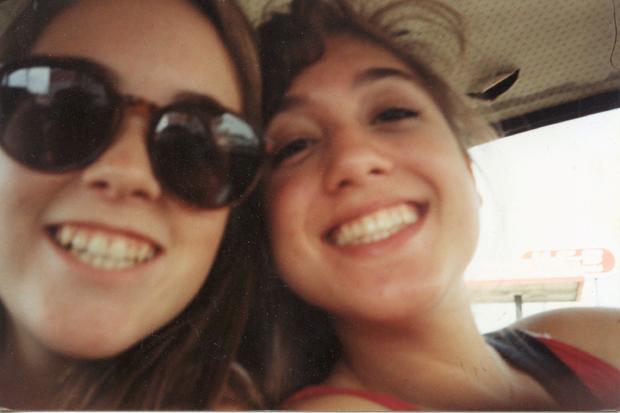
Sonora did as best she could, picking up some pieces of her sister's life. Eliza, an beast lover, had a pig she planned to enter in livestock bear witness. Only a few months after the murders, Sonora took over those duties.
While Sonora may take seemed to exist coping, the reality, she says, was far dissimilar.
Erin Moriarty: You had to grow upward quickly.
Sonora Thomas: Very quickly … I would say I fell autonomously nether that pressure.
John Jones: We knew they were pain considering, you know, we were hurting too.
Jones, a parent himself, felt the families' grief. He promised to do all he could to assistance them.
John Jones: Nosotros told them what we could. And … I assured them that nosotros would continue them apprised equally to everything that was happening, and we did.
Jones also made a pledge to the families involving the shirt he wore on the dark of the murders.
John Jones: I kind of made a hope to them … that the next time they saw me with that green and white shirt on that that was a signal to them that, you lot know, we knew who did it.
And Jones seemed assured they would observe the killers.
John Jones: Nosotros stayed in abiding contact with the behavioral scientific discipline unit at the FBI in Quantico … they said that I should, as the face up of the investigation, I should projection an air of confidence … that would cause the bad guy to shiver in his boots. … So look in the photographic camera and be confident.
And, when nosotros followed him working the example in 1992, he did just that.
JOHN JONES: Let me just say this, whoever you are out in that location, yous are going to be mine one of these days….
But trying to figure that out was daunting.
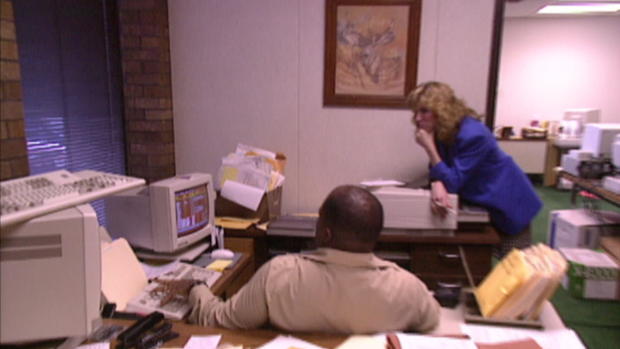
John Jones (at police station in 1992): 342 people that have been listed equally suspects, but we're looking at pages and pages of suspects here.
One of those early on suspects was a teenager named Maurice Pierce. He was arrested eight days later on the murders at a mall near the yogurt store, carrying a .22 caliber gun, the type used in the murders.
John Jones: The .22s were unmatchable.
Erin Moriarty: Then, you tin can't say information technology wasn't his gun? Just there was no way to friction match it.
John Jones: No.
Erin Moriarty: But there was no fashion to friction match information technology.
John Jones: — to bear witness that it was his gun. He gave a argument, matter of fact, I took his argument. And he implicated 3 other boys.
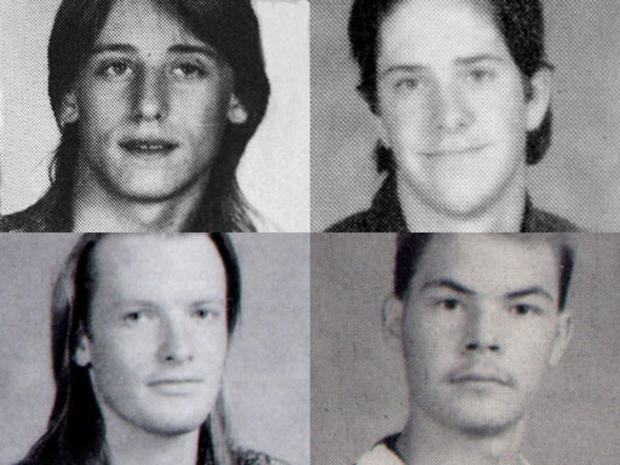
Jones says Maurice Pierce claimed he was driving a getaway car and that three acquaintances, Forrest Welborn, Michael Scott and Robert Springsteen, were involved in the murders. But Pierce's story began to autumn autonomously.
John Jones: It started to crater when we wired him upwardly to become talk to Forest. And we were listening in on the wire, and it was pretty obvious Forest didn't know what Maurice was talking about.
And when Welborn, Scott and Springsteen were brought in for questioning, they as well denied whatever interest. It was decided there was non enough show to charge them and the search for other suspects continued.
CHASING LEADS
Two months after the yogurt shop murders, with no viable suspects, police force were chasing leads — no thing where it took them.
The task strength became aware of a counter-culture type group of local residents known to exist into the supernatural.
DET. MIKE HUCKABAY [at roundtable, 1992]: They're into vampires, the occult, graveyard rites. … They go out and dance and accept pictures on tombstones.
And investigators began to hear that this group might be connected to something far more serious.
John Jones (2021): The — the tips were that they were talking virtually the murders.
Erin Moriarty: Talking about the yogurt store murders.
John Jones: The yogurt shop murders, yeah.
There was one woman in particular whose name kept coming up in connection with these tips. The task forcefulness planned a raid on her dwelling house, hoping to see if any evidence might exist found there.
John Jones: It was creepy in there.
John Jones: But every bit it turns out, a lot of that stuff was rat basic and theatrical parts. Simply … information technology was a good lead. … Till we finally figured out that, uh, they're just living a make-believe life (shaking his caput).
The raid may accept been a bust, but it wasn't long before the task force had its eyes on another person of involvement. A police sketch shows a man that multiple eyewitnesses told police force they saw sitting in a machine outside the yogurt store on the night of the murders.
John Jones: And information technology was somebody nosotros really wanted to talk to. … So, nosotros put it out there.
And the response they got came from an unexpected source.
John Jones: A couple of other investigators from the Sexual practice Crimes Unit of measurement came upward and become … "We have a sketch that looks but like that."
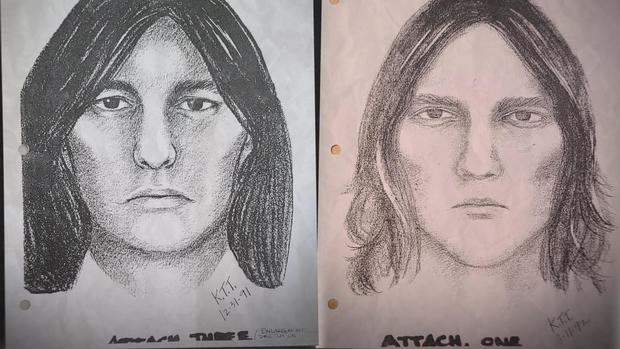
Threeweeks earlier the yogurt shop murders, a young adult female in Austin had been kidnapped and sexually assaulted. Police had released a sketch of three men wanted in connection with that law-breaking. One of those suspects diameter a hitting resemblance to that human witnesses reported sitting in a automobile outside the yogurt shop.
John Jones: You know, I just kind of went zip when I saw the — the composite.
A tip came in that the men wanted in the kidnapping and sexual set on example had fled to United mexican states. Two were defenseless and arrested; 1 who resembled the person of involvement in the yogurt shop sketch. The development fabricated national news.
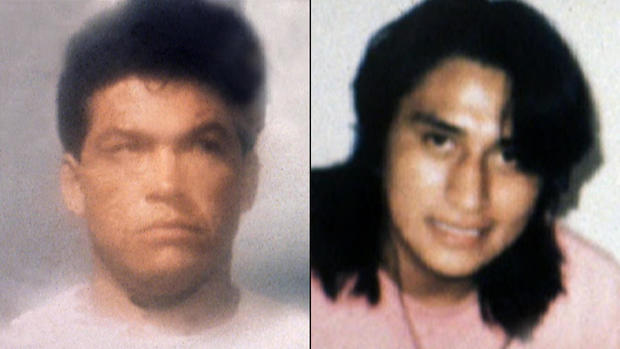
John Jones: When they got caught in Mexico, we went down there ... to interview them. Jones' squad questioned the men. And so, besides, did the Mexican authorities.
John Jones: But the Mexican regime … announced to the whole world that … they confessed, and they were going to try them for the murders down there.
Erin Moriarty: They confessed to the yogurt shop murders?
John Jones: Yeah, they did.
But Jones learned those confessions had details that didn't match the offense scene. Even the quotient of guns they claimed to use was wrong.
John Jones: In that location were too many inconsistencies in the … confession.
Then, Jones' squad reinterviewed the men, and he says this time they recanted just about everything. It made Jones and the other investigators wonder if those confessions were coerced by the Mexican authorities. The once promising pb fell apart .
John Jones: (exhales) Information technology was depressing.
Over the following years, there would be other confessions, ones that were willingly given.
John Jones: Y'all know, nosotros faced 6 confessions.
Erin Moriarty: Six people who confessed?
John Jones: Yeah. Written.
Erin Moriarty: That confessed to this crime?
John Jones: Yes, they did.
Erin Moriarty: And they didn't practice it?
John Jones:Nope.
In 1994, afterwards virtually three years of leading the investigation, John Jones was moved out of the homicide division. He says information technology was a mutual determination. Austin Police wanted fresh optics working the case, and Jones felt it was time to move on. Other detectives took over and, as time passed, the victims' families were left wondering why no ane had been arrested. Amy Ayers' mother Pam spoke to "48 Hours" in 1996.
Pam Ayers [fighting back tears]: They're probably out there leading a life as normal equally they've ever had. And ours is never going to be the same.
That same year, Eliza Thomas' mom moved away from Austin … and the painful reminders.
Maria Thomas (1996): Running into people who were constantly request how the case was going was very hard on me, and particularly my daughter Sonora.
Sonora'due south life had taken a downwards spiral.
Sonora Thomas: In my high school years, things really deteriorated. … Drugs, using alcohol, beingness hospitalized, going to a boarding school for, y'all know, disturbed teenagers, things like that.
The case seemed stalled, until Oct 1999.
RADIO NEWS REPORT: Some breaking news — Austin police take arrested four men in connectedness with the yogurt shop murders of 1991.
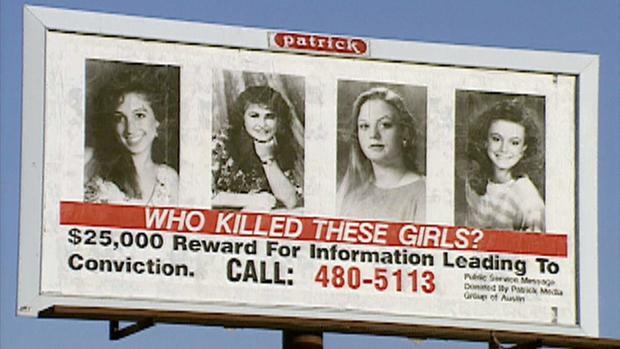
There were finally arrests, but would it answer the question on the billboard that had been haunting Austin for nearly a decade?
SUSPECTS ARRESTED
NEWS REPORT: After nearly eight years, Austinites are getting some answers in the case of the yogurt shop murders…
MAYOR KIRK WATSON (at 1999 press conference): I desire to beginning off by thanking y'all for joining usa here today. … For nigh viii years, we've all waited to hear the words that our law department is shut to a point of solving a crime that has haunted our very souls. … Today, we finally go to hear those words.
When four men were arrested in the fall of 1999 for the yogurt shop murders, relief was felt citywide.
MAYOR KIRK WATSON (at printing conference): Sarah, Jennifer, Amy, Eliza, we did non forget.
The girls' families struggled to accept it all in.
Sonora Thomas: There had been so many false leads for such a long fourth dimension. It was hard to know how to think about it and how to experience about it.
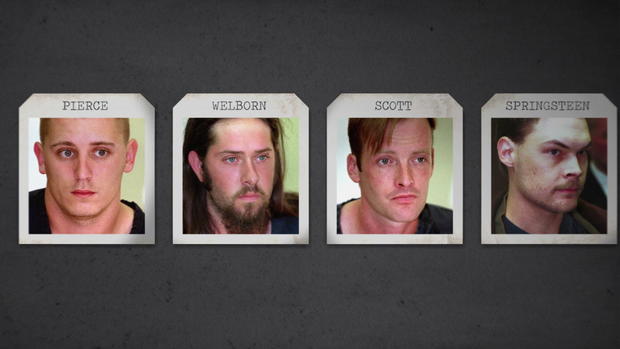
Merely there were finally names and faces to blame: Maurice Pierce, Forrest Welborn, Michael Scott and Robert Springsteen. To the job force, they were familiar names and faces. They were the aforementioned young men that John Jones and his investigators questioned simply viii days after the murders and ultimately released for lack of testify.
John Jones: I was confident and remain confident to this solar day that nosotros got as far with them as we could and then. But that doesn't mean that … there wasn't something developed later that would cause them to really get out and abort them. So, I was going, "yep, skillful job." … I was prepare to dig out the hideous light-green and white shirt.
But earlier that shirt could come out of the closet—the 1 he promised the girls' families he would wear when the case was solved — Jones wanted to know more about what led to the arrests.
Joe James Sawyer: There was no physical testify. Zip.
Joe James Sawyer was appointed as Robert Springsteen'south attorney.
Erin Moriarty: What fabricated them go back and accuse these guys?
Joe James Sawyer: Because the new officers, when they reopened the cold case, convinced themselves that "nosotros permit them sideslip through our fingers. We had to have had the murderers in the kickoff." In part, they decided that because they had cypher else.
There was no new physical evidence all of a sudden tying any of the four men to the crime, just what police did take were two newly obtained confessions— ane from Michael Scott and another from Sawyer's ain customer, Robert Springsteen. Michael Scott'due south confession came get-go. He was questioned over iv days:
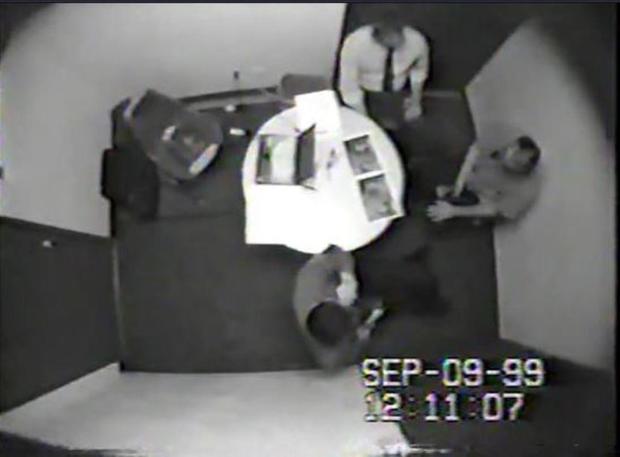
OFFICER (1999 interrogation): Come up on Michael, you lot're doing good. Tell u.s.. Let's do this today. Let'south do it.
MICHAEL SCOTT: I remember seeing girls. … I remember one girl screaming, terrified.
Scott told investigators that he and the others only intended a simple robbery. He said they cased the yogurt store earlier that day. And and so, later on night, he said, they came back armed with two guns.
MICHAEL SCOTT (interrogation): I hear the gun get off. I simply pulled the trigger once…. I hear some other gun become off.
Investigators claimed that Springsteen later corroborated much of what Scott said. Just after intense questioning, he went farther.
Officeholder (interrogation): You f------g know if you f------g raped her, just say information technology.
ROBERT SPRINGSTEEN: I stuck my d--- in her p---- and I raped her.
Springsteen told them he shot 1 girl and raped her.
Joe James Sawyer: He was so tired of this. He'd already been questioned. He'd already been through that factory. He idea, you lot know what? I'll tell you any damn affair you want.
Sawyer maintains his client is innocent and says the confession was coerced. In 2009, Robert Springsteen explained to "48 Hours" why he would acknowledge to doing something and so horrible—something he says he didn't do.
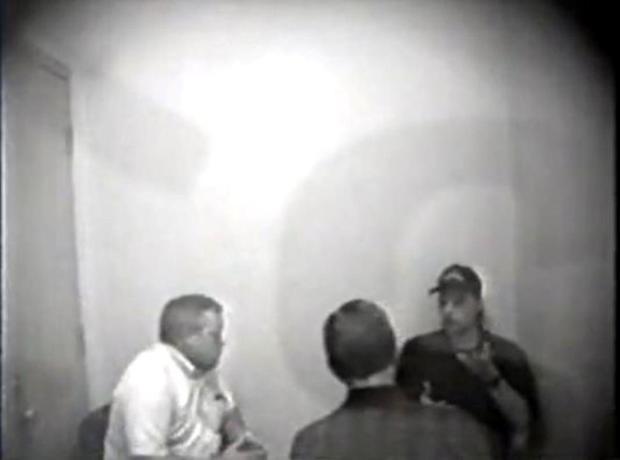
Robert Springsteen: I was berated and berated and berated by the police officers. Until they obtained what it was they wanted to hear, they were non going to allow me to get out. And I basically— they broke me down.
Erin Moriarty: Let me just ask you, did you take anything to exercise—
Robert Springsteen: No. I did not.
Erin Moriarty: — with the murders at the yogurt shop?
Robert Springsteen: No. Never.
Even though Joe James Sawyer didn't take Michael Scott as his customer, he says he has serious concerns about his confession, too.
Officer (INTERROGATION): Is that the gun you shot somebody with, Mike? Is that the gun yous walked up backside somebody with and shot in the caput?
Joe James Sawyer: I frankly couldn't believe information technology. … They terrorized him. And he was afraid to say no.
Forrest Welborn denied having anything to do with the murders, but law were convinced he was the lookout that night and Michael Scott placed him at the scene. Erin Moriarty spoke to Welborn in 1999 in jail before long after his arrest.
Erin Moriarty: Were y'all there that night?
Forrest Welborn: No.
Erin Moriarty: Were yous there every bit a picket?
Forrest Welborn: No. I'grand innocent.
Erin Moriarty: You lot had nothing to practise with this?
Forrest Welborn: Nix at all.
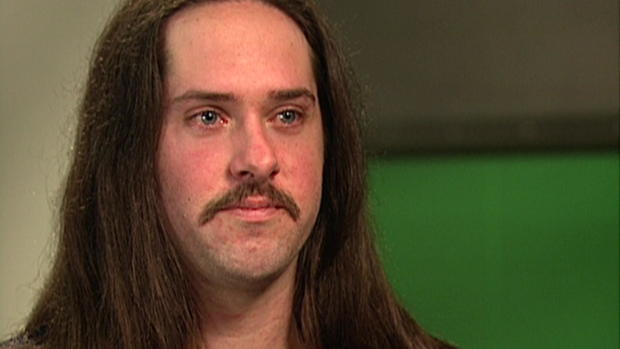
Welborn had been questioned multiple times by investigators over the years, and he never wavered. He, like the others, first came on police force radar when, in 1991, just days subsequently the murders, Maurice Pierce had been caught with that .22 quotient gun at the mall near the yogurt shop. Pierce told the detectives back then that he had given the handgun to Welborn and that it had been used in the yogurt store murders.
Erin Moriarty: Why would he say that?
Forrest Welborn: I don't know.
Welborn has e'er maintained his innocence despite pressure from the constabulary.
Forrest Welborn: They would get right in my confront and, you lot know, tell me everything I said was a lie.
Call up, false confessions in this case were nothing new. Jones said that six written simulated confessions were obtained when he was in charge. Then, when he learned that the two confessions were all the new investigators seemed to have, it gave him intermission.
John Jones: I go, well, perhaps I shouldn't become that shirt out just however.
Information technology wasn't long before the case against the men began crumbling. Charges against Forrest Welborn were dismissed afterwards two 1000 juries failed to indict him. And later on, charges were dropped against Maurice Pierce for lack of testify. Everything brutal apart except the cases against Michael Scott and Robert Springsteen. And with Scott and Springsteen's confessions, the victims' families felt prosecutors had a strong case.
Barbara Ayres-Wilson (outside courthouse, 2010): These young men take been implicated and they have confessed. And they tin can withdraw information technology, but the truth is, they actually were there, and they really did the murders.
A DNA Breakthrough?
In 2001, well-nigh x years afterwards the murders of Eliza Thomas, Amy Ayers and Sarah and Jennifer Harbison, the yogurt shop murder trials began. Both defendants — Robert Springsteen and Michael Scott — faced the decease penalty.
Joe James Sawyer: The simply thing that ever tied Robert or Mike Scott to that offense scene were their confessions.
Confessions that both defendants said were coerced. The two were tried separately. Springsteen's trial was offset. Neither of the men would testify against 1 another. And then instead, prosecutors used their confessions against ane some other, reading parts of the confessions to the juries. Springsteen's lawyer, Joe James Sawyer, was frustrated that he couldn't cross-examine Scott.
Joe James Sawyer: I idea the trial was massively unfair to my client and that it was being washed systematically and with deliberation.
The trial lasted iii weeks. The jury deliberated for xiii hours and then, reached a verdict.
JURY FOREPERSON: We the jury observe the defendant Robert Springsteen Four guilty of the offense of capital murder …
Guilty. Springsteen was condemned to expiry row.
In 2002, Michael Scott went on trial. He was convicted too. He was sentenced to life in prison. But the example didn't end there. Fifteen years later the murders, came a shocking turn of events.
NEWS Study: In a five-iv decision, the court behind me said that Michael Scott'southward constitutional rights were violated during his trial and therefore should go a new one.
Both Scott and Springsteen's convictions were overturned on ramble grounds. The 6th Amendment gives defendants the right to face accusers — and retrieve, in Scott and Springsteen'due south trials, their confessions were used against i another, but they weren't allowed to question each other in court.
Joe James Sawyer: And the relief … the relief was incredible.
But that relief for the defendants came as a devastating blow to the victims' families. We after spoke to Eliza Thomas' mother, Maria, almost that moment.
Maria Thomas: Every time I hear those words, "that their rights were violated," I just feel like I'm going to get insane. … Their rights are violated. Our girls were murdered.
Sonora Thomas: It ruins your sense of fairness. It ruins your sense of — that we live in a just world.
Even though their convictions were overturned, Scott and Springsteen were non released. A new district chaser, Rosemary Lehmberg, was determined to retry them. In an effort to find more evidence, her part had ordered DNA tests on vaginal swabs taken from the victims at the time of the murders. It's called Y-STR testing — and was fairly new in 2009 when "48 Hours" spoke with D.A. Lehmberg.
Rosemary Lehmberg: This engineering science searches for male person DNA only
A fractional male Deoxyribonucleic acid contour was obtained from 1 of the victims believed to have been sexually assaulted. And no one expected what it would reveal.
Erin Moriarty: Does that Dna match any of the four immature men who were originally defendant and two of them who've been convicted?
Rosemary Lehmberg: It does not.
The Deoxyribonucleic acid did non friction match any of the original four suspects, including Scott and Springsteen. And that'southward significant considering Springsteen, in that confession he said was coerced, told investigators he raped one the girls.
CeCe Moore is a Dna expert and genetic genealogist whom we asked near the case and the role of Y-STR Deoxyribonucleic acid in criminal cases.
CeCe Moore: Information technology is a tool that can eliminate about everyone … It should eliminate everybody but the suspect.
Erin Moriarty: If their Y-STR does non match, they did not contribute that DNA?
CeCe Moore: Because of … where that Dna was constitute, yes, in this case, it's very of import.
The district attorney was focused on finding the source of that DNA — she wondered if Springsteen and Scott had another partner.
Rosemary Lehmberg: I remain really confident that … both Springsteen and Scott were responsible for killing those four girls.
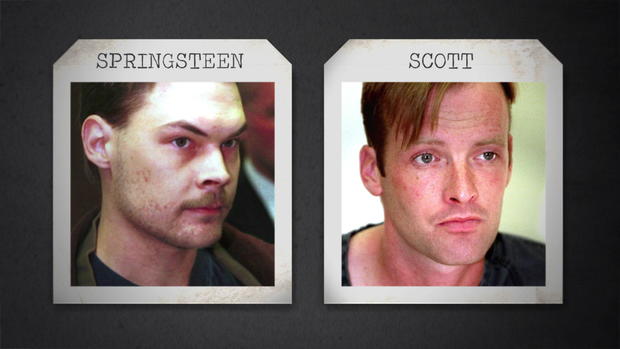
Only in 2009, with no matches on that Dna, Lehmberg dropped charges against Springsteen and Scott. Later on nearly ten years backside bars, they were released — simply non exonerated, leaving open the possibility they could be retried at a later time.
ROSEMARY LEHMBERG (at printing conference): This was a hard decision and 1 I'd rather not have to make.
The question remained though: whose Dna was information technology?
Amber Farrelly: I know who information technology is.
Joe James Sawyer: The killer's.
Erin Moriarty: Yous're convinced that that —
Amber Farrelly: That is a certain truth.
Amber Farrelly was function of both Scott and Springsteen'south defense teams. She came up with a theory that the mystery DNA might belong instead to two never-identified men who witnesses reported seeing sitting in the yogurt store but before information technology closed.
Amber Farrelly: Those two men were described wearing fatigued-colored jackets. …They were very slouched over, whispering, like they were — information technology was a very close chat in a booth.
Officials tried to track down those two men equally well as the source of the Dna. And then, in 2017, an Austin police investigator searched a public online DNA database to see if he could get a hit. And, unbelievably, he did.
Michael McCaul: I thought, my God, we actually have a take a chance, a shot to solve this crime after then many years.
WHO KILLED THESE GIRLS?
Congressman Michael McCaul: I actually thought this was information technology - I really thought we had a chance to solve it.
United states of america Congressman Michael McCaul, like and then many others from Austin, hoped that the recently uncovered Deoxyribonucleic acid in the Yogurt Shop murder example might finally bring answers to the victims' families.
Congressman Michael McCaul: We'll never forget that tragic day. Information technology'southward stained in my memory.
Xx-five years after the murders, the Austin Law Department went searching for a match to the Y-STR DNA that had been found on the yogurt store victim believed to have been sexually assaulted. And, in 2017, they got a pause. On a public DNA database used for population studies, investigators thought they had found a match.
Congressman Michael McCaul: I've seen Dna … evidence homicide cases. … the Dna show is really the key here.
Just that sample from the crime scene was not a consummate Deoxyribonucleic acid profile, it was just Y-STR — the male person portion of DNA. And, it was not a very detailed sample, having merely sixteen markers.
CeCe Moore: Sixteen STR'due south is not a very powerful lucifer … there could be millions of people with that same contour … So, in genetic genealogy … We usually use 67 or 111 markers, or peradventure even more.
Erin Moriarty: But isn't information technology a place to start?
CeCe Moore: It is … It's non absolute, just if at that place'southward nothing else to piece of work with, it is certainly something to look into.
Still, it seemed to be the nearly promising lead in years. Just there was a problem: the seemingly matching sample on the public database had been submitted anonymously by the FBI. It belonged to a federally convicted offender, arrestee, or detainee, but had no proper noun attached to information technology. When Austin regime tried to become a name, the FBI would non provide it, citing privacy laws.
Congressman Michael McCaul: At that place are some restrictions on privacy … And so, it gets into some very sort of, dicey issues.
Frustrated, officials reached out to Congressman McCaul for aid.
Congressman Michael McCaul: And so, I pressed the FBI very hard.
Finally, in early on 2020, the FBI agreed to piece of work with the Austin Police Department to see if further testing could be done on that Y-STR DNA from the crime scene.
Congressman Michael McCaul: I was very excited almost it. The idea that we could bring this instance to closure for the families and bring those responsible to justice.
More advanced testing came up with additional markers: 25 instead of the original sixteen. Simply as so ofttimes happened in this example, what seemed so promising, turned into thwarting.
Some of the additional markers did not match the FBI sample. In other words, what seemed to be a match, was not. In a letter to Congressman McCaul, the FBI explained the new results "conclusively exclude the male donor of the FBI's sample … equally such, the FBI Y-STR contour is not an investigative pb."
Congressman Michael McCaul: And that was the greatest disappointment considering we really thought we had it.
Erin Moriarty: If it didn't match that individual, doesn't it withal hateful at that place'due south somebody out there — this Dna belongs to somebody, right?
Congressman Michael McCaul: It does. It does. And that's why we're not going to residue till nosotros notice the match.
Erin Moriarty: How of import so, is this Deoxyribonucleic acid profile that exists … to solving this example?
Congressman Michael McCaul: I mean, information technology'south everything.
With Dna inquiry advancing so apace, there is existent promise that one 24-hour interval, that sample of Dna obtained 30 years ago, may finally solve this instance. Still, it will not erase the pain or loss of lives.
Sonora Thomas: Every year that goes by, I get farther and farther abroad from my sis, yeah. And I worry nearly losing memories.
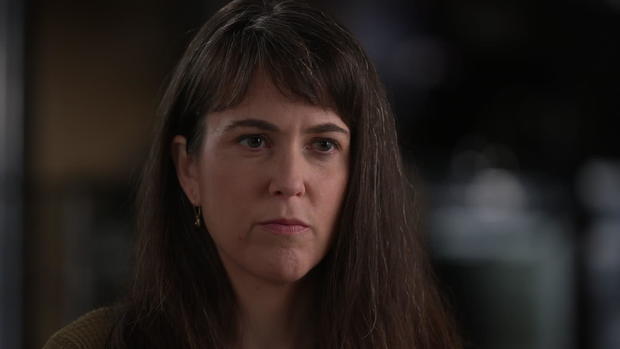
Sonora Thomas struggled for years with panic attacks and physical hurting, until, with the help of therapy, she realized information technology was connected to the murder of her sister Eliza. With a unique understanding of what trauma victims feel, Sonora wanted to help others similar her, and became a therapist.
Sonora Thomas: There'southward so many moments, you know, when your middle is open, you know, you're joyful. But there's besides this loss that's always accompanying your life.
Sonora found it helpful to expect for means to remember Eliza.
Sonora Thomas: When we got married, nosotros had a blossom and an empty chair at our ceremony, and my sis was mentioned.
Compounding Sonora's pain, her mother died in 2015. Maria Thomas passed abroad with so many unresolved questions about the murder of her daughter.
Sonora Thomas: There is a kind of torture that continues by the fact that information technology'southward unsolved and it's ongoing.
John Jones (shaking his head): It's always there.
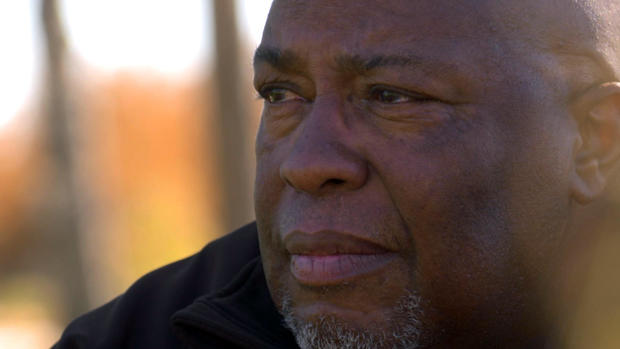
John Jones is still haunted past the fact that the instance is unsolved, and by what he saw that gruesome night. He has suffered from PTSD through the years.
John Jones: I had completely close downwardly to where all my energy was directed at the example.
Erin Moriarty: It took a toll on you, didn't information technology John, even thirty years after?
John Jones: Well, yeah. Information technology would on anybody, I call back — not as much equally the families, you lot sympathise.
Erin Moriarty: I know.
John Jones: Whatever hurting I'm having pales in comparison to what they're going through.
These days, Jones finds solace singing in his church choir.
John Jones: I can relax when I'm in church.
Erin Moriarty: Leave the world backside? Leave outside?
John Jones: No, I know it's just by the door.
And when he's in that outside world, the families of Amy Ayers, Jennifer and Sarah Harbison and Eliza Thomas, are never far from his thoughts.
John Jones: I experience bad for them. That it'southward still non solved.
But Jones has hope. He has kept that shirt he wore the dark of the murders — the shirt he promised to never wear until the case was solved.
Erin Moriarty: 30 years after, it's nonetheless sitting in there.
John Jones: It's nevertheless sitting there. It is.
And sometime soon, John Jones looks forward to wearing it once more.
John Jones: I merely hope one of these days we can put this matter to bed, for the families' sake.
If yous have information nearly the Yogurt Shop Murders, call 512-472-TIPS.
Congressman McCaul has introduced legislation to give more rights to the families of homicide victims to have common cold cases reviewed.
Produced by Ruth Chenetz, Stephanie Slifer and Anthony Venditti. Michael McHugh is the producer-editor. Marlon Disla and Michelle Harris are the editors. Patti Aronofsky is the senior producer. Nancy Kramer is the executive story editor. Judy Tygard is the executive producer.
Source: https://www.cbsnews.com/news/the-yogurt-shop-murders-austin-texas-families-investigators-haunted-by-unsolved-case/
0 Response to "What Happened to the Families With Congressman at Airport Jones"
Post a Comment